Cluster Pays in Slot Machines: How Winnings Are Calculated and How They Differ from Paylines
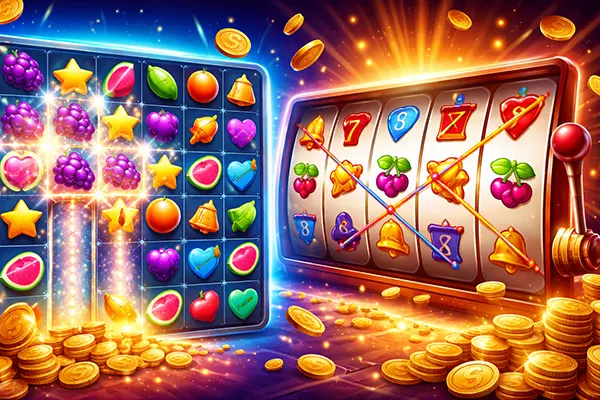
Cluster pay mechanics have transformed the way modern slot machines calculate wins. Instead of relying on fixed paylines running across the reels, these games reward groups of matching symbols that appear adjacent to each other. As of 2026, cluster-based slots are widely used by leading developers such as NetEnt, Big Time Gaming and Play’n GO, particularly in grid-style formats. Understanding how cluster payouts work — and how they differ from traditional line-based systems — helps players interpret paytables correctly, manage expectations and assess volatility more accurately.
How Cluster Pays Work in Modern Slot Design
In a cluster pay slot, symbols must connect horizontally or vertically to form a winning group. Diagonal connections are typically excluded unless explicitly stated in the paytable. Most games require a minimum of five identical symbols touching each other to trigger a payout, although some titles use four as a starting threshold. The layout is often a square or rectangular grid — for example 6×6 or 7×7 — rather than the classic 5×3 reel format.
Each symbol in the cluster contributes to the total win. The payout value increases progressively depending on the size of the connected group. For example, five matching symbols might pay 0.5x the stake, while 15 connected symbols could pay 10x or more. The exact multipliers vary by game and are always defined in the paytable. This structure means larger clusters significantly increase potential returns within a single spin.
Unlike paylines, there is no need to activate multiple lines or adjust line counts. The entire grid is active on every spin. The total stake applies to the full board, simplifying bet configuration. This removes the concept of “missing” a win because a specific payline was not selected — a common feature in older slot models.
Cascading Symbols and Progressive Multipliers
Most cluster pay slots integrate cascading mechanics, also known as tumbling reels. After a winning cluster is removed, new symbols fall into place from above. This can create additional winning groups within the same paid spin. Each cascade is counted as part of the original wager and does not require an additional bet.
To increase volatility and excitement, many games apply progressive multipliers during cascades. For example, the multiplier may start at 1x and increase by +1 after each consecutive win within the same spin. If three cascades occur, the third win may be multiplied by 3x. Some titles reset the multiplier after the spin ends, while bonus rounds may allow multipliers to carry over.
This cascading structure significantly changes payout dynamics compared to traditional lines. Instead of one static result per spin, cluster systems can generate multiple sequential wins, increasing both engagement and potential upside.
How Payline Slots Calculate Wins
Traditional slot machines operate using paylines — predefined patterns that run across the reels. A standard 5×3 slot might contain 10, 20 or even 50 paylines. Wins occur when matching symbols land along an active payline from left to right, unless the rules specify alternative directions.
Each payline acts independently. If a winning combination appears on a line that was not activated by the player’s stake, no payout is awarded. Modern online slots usually activate all paylines automatically, but the mathematical logic still relies on line-based positioning. This means symbol placement must align precisely with the defined line path.
The payout in a payline system depends on the number of matching symbols and their value in the paytable. For instance, three high-value symbols may pay 5x the line bet, while five may pay 100x. The total bet is divided across active lines, meaning the per-line stake influences the final return.
Structural Differences in Probability and Volatility
Cluster slots often produce more frequent small wins due to the number of possible adjacent symbol combinations across the grid. However, their volatility can increase sharply when multipliers and cascading mechanics are added. Large clusters are statistically less common but deliver substantial payouts when they occur.
Payline slots, by contrast, rely on reel weighting and symbol distribution across fixed positions. Their volatility profile depends heavily on symbol frequency and bonus feature triggers. Because wins are limited to line paths, the probability model differs fundamentally from cluster grids.
From a mathematical standpoint, both systems are governed by certified random number generators (RNGs). The difference lies in how symbol outcomes are evaluated after the RNG determines the reel result. Cluster systems assess adjacency; line systems assess linear alignment.
Practical Impact for Players in 2026
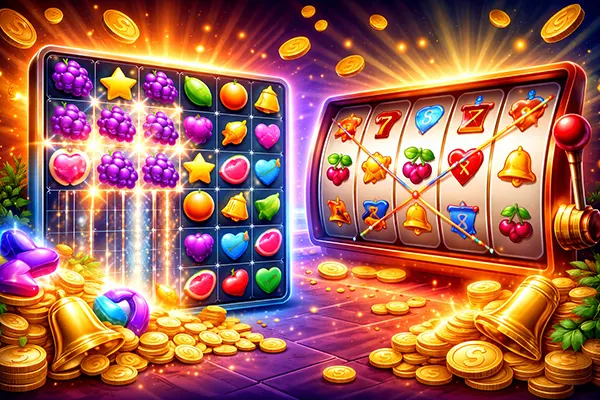
In 2026, cluster pay slots are commonly associated with visually dynamic interfaces and animated cascades. They often appeal to players who prefer simplified betting structures and continuous action within a single spin. The absence of paylines reduces configuration complexity, making the experience more intuitive for newer audiences.
However, cluster games may involve higher variance due to multiplier stacking during cascades or bonus features. Reviewing the volatility rating and maximum win potential is essential before placing stakes. Many modern titles disclose RTP percentages clearly, typically ranging between 94% and 97%, depending on jurisdiction and configuration.
Payline slots remain popular for their familiarity and structured payout clarity. Players who prefer predictable line-based mechanics or traditional bonus rounds often choose this format. Both systems can be fair and transparent when licensed by recognised authorities such as the UK Gambling Commission or the Malta Gaming Authority.
Choosing Between Cluster and Line-Based Formats
The decision ultimately depends on personal preference and risk tolerance. Players who enjoy chain reactions, growing multipliers and grid-style visuals may favour cluster mechanics. Those who prefer straightforward symbol alignment across defined paths may opt for payline slots.
Understanding the paytable is critical in both cases. Cluster games require attention to minimum symbol thresholds and adjacency rules, while payline slots require awareness of line count and bet distribution. Misinterpreting these mechanics can lead to incorrect assumptions about potential returns.
Regardless of format, responsible bankroll management remains essential. Setting limits, understanding RTP and recognising volatility levels are more important than the structural difference between clusters and lines. The mathematics behind each system is transparent — provided the player takes the time to read the rules carefully.